Showing posts with label insulin resistance. Show all posts

Friday, September 12, 2008

Friday Chronic Roundup: September 12, 2008

PCOS/Insulin Resistance/Diabetes


Interstitial Cystitis/IBS/Vulvodynia/Pelvic Floor Dysfunction
Allergies/Asthma/Celiac Disease

Friday, August 22, 2008

Friday Chronic Roundup: August 22, 2008


PCOS/Insulin Resistance/Diabetes

Interstitial Cystitis/IBS/Vulvodynia/Pelvic Floor Dysfunction
Allergies/Asthma/Celiac Disease
Mental Health

Friday, August 8, 2008

Friday Chronic Roundup: 8/8/08


PCOS/Insulin Resistance/Diabetes

Interstitial Cystitis/Vuvlodynia/Pelvic Floor Dysfunction/IBS
Fibromyalgia/Chronic Fatigue Syndrome
Allergies/Asthma
Mental Health

Friday, July 18, 2008

Friday Chronic Roundup


It's another Friday!!! Time for some news updates...

PCOS/Insulin Resistance/Diabetes

Interstital Cystitis/Vulvodynia/Pelvic Floor Dysfunction/IBS
Fibromyalgia/Chronic Fatigue Syndrome
Allergies/Asthma/Celiac Disease

Tuesday, July 1, 2008

Inflammation Theory: Now More Credible Than Ever


A new study shows that my Inflammation Theory is more credible than ever now.

DeLano and his collaborator, Geert Schmid-Schonbein, a professor of bioengineering at UCSD, have been working with a widely used laboratory model of disease, a rat bred to have high blood pressure.

They have found that proteases, whose function is to clear away molecular debris, can go awry and split apart a number of different cell wall receptors. If insulin receptors are damaged, normal metabolism of glucose is not possible, and diabetes can be the result. Proteases can also damage receptors that are vital for the functioning of infection-fighting leukocytes.

And there's more...
The researchers also found that protein receptors on the surface of cells are clipped off as the rats develop high blood pressure. "Many receptors in blood vessels cause them to relax," DeLano said. "Many proteases we see in the animals cleave receptors responsible for relaxation." Giving the rats doxycycline, an antibiotic that is also a protease inhibitor, brought down their blood pressure and restored normal immune system function.
What does this all mean?
"This is really an important observation," said H. Glenn Bohlen, a professor of cellular and integrative physiology at Indiana University Medical School, who wrote an accompanying editorial. "It ties in information that high blood pressure and insulin resistance have the same cause, damage to receptors."
And the real kicker:

The newly reported studies might also help explain why antioxidants such as vitamins C and E help against inflammation, he said.

"The next approach probably would be to treat an inflammatory state," Bohlen said. "There is something going on that we can interact with. There are many commercially available methods for blocking proteases."

In addition to antibiotics such as doxycycline, drugs such as ACE inhibitors are protease inhibitors, DeLano said. Protease inhibitors are also used to control HIV, the virus that causes AIDS.

(Emphasis mine.)

Let's home this memo makes it to our doctors.

Friday, May 9, 2008

Change of Pace

As I have mentioned previously, I had been seeing a new endocrinologist recently. At first I was excited by this prospect, but my faith in the relationship had been tested along the way to the point where I wasn't sure he was the doctor for me. It took me some time, but I knew from the first meeting that this would be a relationship that, at the very least, would take some work.

At our last meeting I was less than encouraged. Though he put me on Byetta as requested, and supported the decision, there was still this nagging feeling that there wasn't the right mix involved. Here were my warning signs (some of you may relate to these things):
1. He advocated very early on (early in the first appointment) that I should consider weight loss surgery. (WLS)
2. He wanted to see me every 2-3 weeks.
3. After the initial 2-3 weeks when I did not lose weight, I was made to feel as if this were some grave dissapointment.
4. He wasn't as concerned about my lifestyle choices as he was about the pure numbers--weight, insulin levels, glucose levels, etc. Nor did he ever put any effort into discussing the lifestyle choices which would affect those numbers such as food choices, exercise levels, other conditions, etc.
5. He did not seem to take into account my other chronic illnesses in any of our discussions.

Nevertheless, I gave it a good try--even though his office was at least 45 minutes away from work or home for me. I have often had to cancel appointments for this reason. But I thought there weren't many options.

Somehow, I came across another name, a woman no less (which I prefer for several reasons) who was in between home and work. I met with her this morning and she decided to give the Byetta another try (even though it was helping, I had decided to give it a rest until I made a decision about the direction, if any, I wanted to pursue with my IR/PCOS). She also kept me on the 2000 mg of Glumetza. Here are the things that made me feel more comfortable with her and her decisions:
1. She did not mention drastic (and frankly dangerous) measures such as WLS.
2. Although she noted that weight reduction is critical for PCOS, especially if I ever want to conceive, she did not push that as the be-all/end-all.
3. She listened to me and did a thorough background history.
4. She advocated lifestyle changes.
5. She advocated me tracking my blood glucose levels fairly regularly to ensure that I wasn't treading on the line between IR and Type 2 Diabetes.
6. She understood the connection between my weight loss and eventual regain due to other chronic conditions.
7. She made the next appointment 3 months out--time for me to actually make a reasonable difference in my life.

I am optimistic about these changes. More importantly, I am, once again, comfortable with the care I am receiving. The thing is that when you have a chronic illness, you have a greater awareness of the quality of the care you receive. In the same vein, you are in greater need of a greater level of care. If a doctor does not take into consideration all of the conditions that your body has (whether they be illnesses or just facts of your life), then you are going to be boxed into certain failure in the quest to live a better life.

Not only that, but I realized the weight that was lifted off of my shoulders by having a positive experience. Granted, my weight was up from my normal weight and I'm not feeling myself all over, but for the first time in a long time I felt empowered to do something about it, instead of hounded. As opposed to feeling that I can never please my medical professional, I feel like my medical professional is trying to help me please myself.

It's a start, but it's a great feeling.

Thursday, May 1, 2008

I Thought We Had Established This


Apparently, I was wrong. Researchers in the UK have "discovered" that insulin resistance is more likely to occur in females that have PCOS than without.

These new findings demonstrate that the driving force behind the changes in PCOS is hyperinsulinemia and not the fat content. The methodology is interesting; the definition of PCOS encompasses the wide spectrum of the phenotype of the disease, which could weaken their findings. However, the MRI scanning of fat distribution is faultless. The researchers admirably highlighted their own limitations in the report, allowing us to look beyond these weaknesses and reflect on the findings. Their purist approach to match BMI and fat mass between the groups reduced their sample size to 22 matched pairs. The ages of the groups were unable to be matched; however, we agree with the researchers that this is a confounding variable.

Elegantly in a small sample the researchers have shown that the insulin resistance in PCOS is independent of visceral adiposity. We believe these findings bring us one step closer in unraveling the mechanism behind the metabolic abnormalities of PCOS, opening new doors for therapeutic intervention and prevention.

I mean, that's great that they've established it, but I thought we were beyond that.

Tuesday, April 15, 2008

Met is a Good Bet


Turns out Metformin is a good bet for those with PCOS, regardless of whether they have the often-accompanying Insulin Resistance.

A study in the Irish Medical Journal evaluated the use of Metformin in PCOS patients. The study abstract states:

This study evaluated the use of metformin as first line treatment for patients with polycystic ovary syndrome. A retrospective review of patients’ files diagnosed with PCOS over 16 months in Department of obstetrics and gynaecology of a Regional hospital. The outcome was the response to metformin treatment regardless of the main complaint. Treatment response was measured by change in LH/FSH ratio, fasting insulin, testosterone, day 21 progesterone and/or pregnancy. A day 21 progesterone greater than 25.5 nmol/l and/or pregnancy were the parameter of ovulation. Thirty-four patients were diagnosed with PCOS. Twenty-five complained of infertility (14 primary and 11 secondary), six patients had oligomenorrhoea or amenorrhoea and three presented with hirsutisim. Seventeen patients received metformin as first line treatment. Eight received it with other treatment (5 clomiphene citrate and 3 ant androgens). Nine patients did not receive metformin. This study justifies the use of metformin as an appropriate first line treatment for PCOS.
(the bold is mine)

For those of us with PCOS, we can tell you the Met can do wonders. Maybe some more skeptical practitioners will now think twice when bashing Met as a PCOS-only treatment.

Friday, April 11, 2008

Bitter to Swallow--Sweet to Savor


Researchers have found that an extract from Bitter Melon is good at combating diabetes and insulin resistance.

In the current study, Tan and colleagues isolated and described several compounds from bitter melon known as cucurbitane triterpenoids, and tested their effects on glucose (sugar) and fat metabolism in cells and in mice.

When tested in muscle and fat cells, the researchers found, the compounds stimulated the glucose receptor GLUT4 to move from the cell interior to the cell surface, thus promoting more effective glucose metabolism. Several of the tested compounds had effects comparable to those of insulin.

Don't get too excited...they still have some work to do:
The researchers note that there may be as many as 70 active compounds in bitter melon. "The present study provides an important basis for further analysis of structure-activity relationship to develop optimized leads from (bitter melon) for the treatment of insulin resistance and obesity," they conclude.
All in all, a small step to find a new viable treatment. I am glad it's good for something, though, because it is one scary-looking plant.

Another Reason to Hate Insulin Resistance


Not that this surprises me much as there seems to be a good deal of insulin resistance and Alzheimers in one side of my family, but now there's a link to show that it's more than just speculation.

A new study on men living in Sweden suggests that a poor insulin response in midlife, the main characteristic of diabetes, is linked to an increased risk of developing Alzheimer's disease up to 35 years later.
It doesn't get much clearer than that.
Impaired insulin secretion, glucose intolerance, and estimates of insulin resistance, were all linked with elevated risk of any dementia and cognitive impairment.
Geez. Talk about a downer. Now not only are we losing control of our bodies, but we're losing control of our minds. Seeing that I'm a likely candidate for Alzheimer's disease due to family history, it just makes things even more urgent. Maybe taking care of my insulin resistance is more important than I thought.

Friday, March 28, 2008

Hello/GoodBuy--Byetta


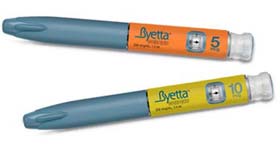
Though I haven't talked about it in any great detail here, I have started Byetta to control my Insulin Resistance and PCOS. It was a tough choice--the doctor's agreeing to put me on it was not necessarily for the same reasons that I wanted to be on it (he wants me to lose weight, I want to stabilize my weight and then go from there).

I have been on it for about three weeks now. It's a pain because it's an injection pen. The injection is barely noticeable, except for the fact that I now have a couple of bruises on my stomach from the injection sites. They don't hurt, they're just there.

I was fearing the worst in terms of side effects. Luckily my body (which has had its share of medicine chucked at it over the years) was resilient and I have yet to have any really disturbing effects. Some nausea, but to be honest, I'm nauseous half the time anyhow.

I have noticed that it has decreased my appetite immensely--which during my trip to Vegas made the trips to the buffet a little less economical. One plate for $25 is not the same as if I had stocked up. Nevertheless, I was dilligent for the first half of my vacation. I gave up the last few days. It wasn't any real choice--I just forgot.

But I have noticed my weight stabalizing, even after the great Lyrica Disaster of 2008. I may have even dropped a few of those added pounds, which would be nice. But more importantly, I feel as if my hunger isn't driving me unnecessarily now.

Sometimes with insulin resistance, part of the problem is not only that your body can't process carbs, but that your body craves them uncontrollably. I learned this after first being diagnosed with IR and reading the Insulin Resistance Diet. Once you get the insatiability under control, I've noticed, you're better focused and less tired. I feel like the Byetta has helped me do just that.

This has played into my whole Thin Line of Fat situation, though. Now that I've stabilized and that I've made progress with the PFD--am I ready to go back to the gym? Am I ready to tackle a low carb, high protein diet? Will it even matter? I guess only time can tell.

For now I'm just catching up on life post-vacation. One small step for me, one giant leap for my insulin resistance.

Monday, March 3, 2008

The Thin Line of Fat: A New Series


Those of us who have been fat our whole lives recognize the discrimination and prejudices associated with being larger than "normal." In fact, many of us have even used the terminology ("overweight," "obese," "thick," "big-boned," "large," "Ruben-esque," "full-figured," etc.) ourselves to conform to the outside world. It's a vicious cycle that often starts when we are young and usually never ends--a cycle of self-hate, bad habits, bad choices and lack of confidence that is more enveloping than a black hole.

When you have a chronic illness, there's even more to add to the fold.

For years I struggled with what I knew in my heart to be weight that I didn't earn. And by that I mean in no way to suggest that anyone earns the weight they have (though I'm sure some do), but only that my body was doing things that I knew I couldn't control. It was only years after I was diagnosed with PCOS and someone taught me about Insulin Resistance that I was vindicated.

In those intervening years, however, instead of questioning my body, myself and my sanity I decided to embrace who I was. This was in large part due to meeting one woman in particular who taught me to start loving who I was, regardless of how much I weighed. (Unfortunately and sadly for the younger versions of Me in this world, Heather MacAllister passed after a bout of cervical cancer.) Ever since then I have been on a path of self-discovery and self-appreciation. I am no longer fat-phobic (and yes, you can be fat-phobic even if you're fat) and I appreciate and patronize the online fat-o-sphere daily. (See sites like Big Fat Blog, Big Fat Deal, Angry Fat Girlz, Fatshionista, the Rotund, Babble, and more like those listed here courtesy of Big Fat Blog.)

Then I was confronted with the confirmation that my fat had a cause that could (and probably should) be worked on. I am insulin resistant. That has caused my body to improperly turn sugar into fat and store it indefinitely. Thus, there is a way to start to control it.

For a year I went on a low carb diet, worked out regularly and lost 60+ pounds. By the world's standards I was still big, but for my standards I was svelte.

Then IC hit (or at least what I believe to be IC, PFD and vulvodynia now after further investigation). I was put on medicine that derailed my progress indefinitely by forcing me to gain weight. For the first time in over eighteen months I craved sugar and carbs. And being that it came at the time where my emotional wellbeing was at the eye of the perfect storm (getting engaged, deaths of family and friends including both grandmothers, preparing for and taking the bar exam) I was lost.

Now I struggle again. Not because I don't know what needs to be done...that part has been figured out. But it's more because I'm torn about what it means to love myself. I've agreed for a long time that it doesn't mean I have to be thin, but somehow have I convinced myself that it means that I have to be fat? And is that right? It wasn't until I lost any weight (for the first time in my life successfully) that I recognized it as a burden when I put it back on. I never felt overweight until the past year and a half. I've been fat, big, rotund, large, etc. but never overweight.

I'm at a crossroads where I've begun to get some of my intervening chronic illnesses on some sort of path to recover. Do I get back on the train that derailed a year and a half ago? Or does that train have some drawbacks of its own?

My dilemma continues to be that while I think I'll never be thin, I'm afraid of losing my identity as a fat chick. It sounds bizarre, but true. And at the same time, it's easier for me to rest where I am because, let me tell you, the first month of a healthier lifestyle is a hard road to follow. I know that it'll help the PFD and will definitely help the PCOS and IR, but is that some sort of conformity to the "man" that I don't want to associate with? And I know I felt better 60 pounds ago, so what am I thinking about?

When one has a chronic illness, these are the identity traps we fall into. This is even more true when we are given meds for problems that cause us to gain more weight than the "extra" weight we've been carrying all along. I want to confront my health, but I've spent so long advocating the fact that being fat isn't a health problem. If I lose weight, do I lose credibility now too? But if I gain it, or stay where I'm at, don't I somehow mask the underlying problem?

So the next few months are going to be dedicated, personally, to that issue. I need to get healthier, but I also need to learn to confront my demons about fat and thin and about health and illness...about mental pain and physical pain and how to balance the two.

Maybe it comes down to the fact that I need to have some sort of agreement with myself that it's okay to lose or gain weight on my own, but if its the effect of an illness or its cure, it's not me and it's okay to work against that. Maybe I need to stop identifying myself entirely. Or maybe I need to realize that everyone has that perfect spot and though I'll never be a size 8, a size 20 would be nice.

I'm a big girl. I am beautiful. And I'm beleaguered with chronic illness. Where is my balance?

Only time will tell...

Wednesday, February 13, 2008

New Genetic Family Ties


Scientists have found that there is a gene that creates sensitivity to insulin so that people whose gene is impaired have a lower functioning system. A lower-functioning system leads to poor insulin tolerance and then to fat.

Here's an excerpt from the story:

In this latest piece of research, the scientists studied an enzyme called diacylglycerol kinase (DGK) delta, which is vital for maintaining the insulin sensitivity of cells. DGK delta plays a role in breaking down lipids. The researchers found that the gene which produces DGK delta is less active in the muscle tissue of people with high blood sugar and type 2 diabetes.

In the absence of this gene, the muscle cells were less sensitive to insulin and had impaired fat burning ability, increasing the person's risk of developing obesity.

The good news is that correcting blood sugar levels through exercise or drugs boosts the activity of the gene which produces DGK delta and restores the insulin sensitivity of the cells.

'The expression of this gene is reduced when blood sugar rises, but activity can be restored if blood sugar is controlled by pharmacological treatment or exercise,' explains Professor Juleen Zierath of the Karolinska Institute in Sweden, who led the research. 'Our results underscore the importance of tight regulation of blood sugar for people with diabetes.'
This plays pretty well into my Inflammation Theory. Some people have a greater sensitivity than others and the norm (or the desired norm at least) is for a heightened sensitivity. Those without that sensitivity or those whose sensitivity has been burned over time have trouble with it.

Monday, January 21, 2008

Starting to be normal...

This article from the LA Times, reprinted below, talks about how girls are going through puberty earlier and earlier. A girl going through puberty at 8 or 9 is no longer abnormal. Guess I'm just ahead of my time.

I truly think this is related to PCOS and insulin resistance. There's something in our environment or our diet that wasn't there a hundred years ago, and it shows.

--------------------------------

Girl, you'll be a woman sooner than expected

Puberty is arriving ever younger in American females -- 8 is no longer considered abnormal.
By Susan Brink
Los Angeles Times Staff Writer

January 21, 2008

AT 8 or 9 years old, the typical American schoolgirl is perfecting her cursive handwriting style. She's picking out nouns, verbs, adjectives and adverbs in sentences, memorizing multiplication tables and learning to read a thermometer.

She's a little girl with a lot to learn.

And yet, in increasing numbers, when girls this age run across the playground in T-shirts, there is undeniable evidence that their bodies are blossoming. The first visible sign of puberty, breast budding, is arriving ever earlier in American girls.

Some parents and activists suspect environmental chemicals. Most pediatricians and endocrinologists say that, though they have suspicions about the environment, the only scientific evidence points to the obesity epidemic. What's clear, however, is that the elements of female maturity increasingly are spacing themselves out over months, even years -- and no one quite knows why.

While early menstruation is a known risk factor for breast cancer, no one knows what earlier breast development means for the future of girls' health. "We're not backing up all events in puberty," says Sandra Streingraber, biologist and visiting scholar at Ithaca College. "We're backing up the starting point." She has examined the research on female puberty and compiled a summary in an August 2007 report called "The Falling Age of Puberty in U.S. Girls." The report was financed by the Breast Cancer Fund, an advocacy group interested in exploring environmental causes of that disease.

Earlier breast development is now so typical that the Lawson Wilkins Pediatric Endocrine Society urged changing the definition of "normal" development. Until 10 years ago, breast development at age 8 was considered an abnormal event that should be investigated by an endocrinologist. Then a landmark study in the April 1997 journal Pediatrics written by Marcia Herman-Giddens, adjunct professor at the School of Public Health at the University of North Carolina, Chapel Hill, found that among 17,000 girls in North Carolina, almost half of African Americans and 15% of whites had begun breast development by age 8. Two years later, the society suggested changing what it considered medically normal.

The new "8" -- the medically suggested definition for abnormally early breast development -- is, the society says, 7 for white girls and 6 for African American girls.

Through the ages

Puberty involves three stages: breast development, pubic hair growth and, finally, menstruation. Because the final event is typically the most memorable for women, it has been the one most scientifically documented in studies based on self-reported memories. The first 100 years that medical records were kept on the age of onset of menstruation saw continuous drops. Between about 1850 and 1950 in Europe, the average age of a girl's first period dropped from about 17 to about 13. (The U.S. doesn't have good data earlier than the 20th century, though trends were probably similar, says Steingraber, who prepared the August 2007 report after examining hundreds of studies on potential dietary, lifestyle and environmental causes of early puberty.)

Much of that decline probably has to do with better nutrition and public health improvements that reduced the spread of infectious diseases. "Better diet, closed sewer systems, deep burial of the dead," Steingraber says. "By the beginning of the 20th century, those things were in place."

Adequate food and good health signal the brain that it's safe to reproduce, according to theories of evolutionary biology. "We're healthier and we weigh more," says Dr. Francine Kaufman, head of the center for diabetes and endocrinology at Childrens Hospital. "In some ways, puberty is a luxury."

With the brain picking up these signals, the hormonal parade can begin, first with the release from the hypothalamus of gonadotropin-releasing hormone, which sends other hormones from the pituitary gland through the bloodstream to the ovaries. The ovaries gear up production of a form of estrogen called estradiol, which initiates breast development -- the first step in puberty.

A second signaling pathway stimulates the adrenal gland to begin androgen production, which results in pubic hair. The final stage of puberty is the beginning of monthly periods.

But the first two events are happening significantly earlier in the lives of today's girls than they did in the lives of their mothers and grandmothers. The age of first menstruation has dropped too, at a rate of about one month per decade for the last 30 years, according to a January 2003 study in Pediatrics. Today, the U.S. average for first period is 12.5 for white girls, 12.06 for black girls and 12.09 for Latinas.

The gap between the first appearance of breast buds and menstruation grew wider by as much as a year and a half between the 1960s and the 1990s, according to research published in the October 2006 journal Current Opinion in Obstetrics and Gynecology. The time from breast buds to bleeding, according to Herman-Giddens, is now close to three years.

In short, that finely tuned biological process may have reached a tipping point. Since the 1960s, Herman-Giddens says, the decline in the age of maturity has crossed the line from positive reasons, such as better diet, to negative ones, such as eating too much, exercising too little and the vast unknowns of chemical pollution.

The lack of adequate explanation has some experts worried. "Over the course of a few decades, the childhoods of U.S. girls have been significantly shortened," Steingraber says.

Redefining 'average'

The new average age of puberty, some fear, may be like the new average weight -- typical, but terrible.

"My fear," Herman-Giddens says, "is that medical groups could take the data and say 'This is normal. We don't have to worry about it.' My feeling is that it is not normal. It's a response to an abnormal environment."

Dr. Paul Kaplowitz, chief of endocrinology at Children's National Medical Center in Washington, D.C., and lead author of a special article Oct. 4, 1999, in the journal Pediatrics suggesting a redefinition of early puberty, isn't so sure. Too many girls are being labeled abnormal, he contends.

"Maybe we shouldn't be worrying so much about those girls," he says. "The chance of finding a serious condition in a 7-year-old with pubic hair is very, very small."

There have always been rare cases of extremely early puberty, called precocious puberty. One report, going back to 1834 in Butler County, Ky., was of a baby girl whose hips and breasts began to grow soon after she was born. By the age of 1, she was menstruating and at age 10, she gave birth to a 7-pound baby. Such extreme cases today would be examined and treated.

But the beginnings of breasts, and the first pubic hair, at ages 8, 7 or even 6 for African Americans falls at the low end of today's new normal range.

With statisticians proving that "average" is younger than recently thought, environmental activists are asking whether hormones in food, pesticides in produce or phthalates in plastics and cosmetics could be contributing to breast buds in third-graders. Social scientists have lifestyle suspicions. Does the stress of fatherless households, or the stimulating effects of sexually suggestive television shows, have anything to do with earlier signs of puberty? The suspicions remain difficult to prove.

Despite the reassurance of pediatric endocrinologists that younger development is normal, a lot of parents are still nervous, Kaplowitz says.

"If somebody calls in and says, 'I've got an 8-year-old with breast buds,' there's nothing I need to do," he says. "I discourage referrals. But they show up anyway."

Kaplowitz examined evidence for all suspected environmental and lifestyle factors in his book, "Early Puberty in Girls: The Essential Guide to Coping With This Common Problem."

"The explanation for which there's the most evidence is that it's related to the trend in increasing obesity," he says. "There are other factors, such as if your mother matured early. Sometimes we simply don't know. But overall, the biggest single factor is the trend toward obesity." Fatty tissue is a source of estrogen, so chubbier girls are exposed to more estrogen.

"With environmental influences, there has been a lot of speculation, but little hard data. I'm not suggesting there's no connection, but it's very hard to say there's a proven connection. I think it's environmental mainly in the sense that overeating and lack of exercise is environmental," Kaplowitz says. "I've tried to take the view that we shouldn't be alarmed about this."

Herman-Giddens is not so convinced, but concedes that evidence for environmental causes is close to impossible to obtain. "I myself am shocked sometimes to see very thin girls, 8 and 9 years old, with breast development," she says. "But with all the estrogen-like elements in the environment, it's virtually impossible to study. There's no place to find an unexposed population."

The biggest concern, she says, is that earlier puberty means longer lifetime exposure to estrogen, and early puberty, along with late menopause, is known to increase the risk of breast cancer.

But to design a study in which some girls are deliberately exposed to higher doses of such chemicals would be unethical, she says. Some animal studies provide cause for concern about endocrine-disrupting chemicals, but little hard evidence for humans. And a handful of industrial accidents have provided some data. In 1973, for example, estrogenic chemicals were inadvertently mixed in cattle feed in a Michigan community. The daughters of pregnant and nursing women who ate meat and dairy products from the cows were studied and were found to have begun their periods up to a year earlier than girls not exposed to the chemical, according to a 2000 study in the journal Epidemiology.

Time for a talk

What's clear is that physical appearance is getting ahead of other aspects of girls' maturity. They might be perceived as far older than they are, even when they're still rummaging through their mothers' closets to clomp around in oversized high heels.

"My daughter started developing breasts maybe around age 8," says Rhonda Sykes of Inglewood. "She was still into her doll phase and dressing up to play." So Sykes began having frank mother-daughter conversations about curves and changing bodies a bit earlier than she expected.

"Whatever they look like, they know nothing," says Diana Zuckerman, president of the National Research Center for Women and Families. "Eight- and 9-year olds are learning to make change for a dollar. These are children who are learning the most fundamental facts in school. Imagine trying to teach that child the fundamentals of sex. They're not even playing Monopoly yet. They're still playing Candyland."

The medical community calls earlier puberty normal, the trend goes hand in hand with the obesity epidemic, and science has not yet pinpointed the reasons. And yet, when girls who are still children in the minds of their parents start developing breasts, many of their mothers remember that it happened later in their own lives -- and wonder why.

Theorists and advocates continue to search for definitive evidence, and little girls continue to look like young women at earlier ages. "My biologist brain says, 'There's not a lot you can conclude from the [environmental] evidence,' " Steingraber says. "But I've got a 9-year-old girl. And as a mother, I say, 'They've introduced all these chemicals into the environment, and they have no idea what it's doing. What are they, nuts?' I want data demonstrating safety, not data demonstrating ignorance."

Wednesday, January 16, 2008

Another reason I'm glad I started taking Chromium

This piece shows that chromium is also good for brain function and memory.

This is in addition to it being good for insulin levels/glucose levels.

Monday, January 14, 2008

Two Interesting Insulin Related Science Pieces Today

The first one is about the causes of insulin resistance, which ultimately may lead to a cure (or at least better treatment options.) Basically, the scientists believe that there's a "metabolic traffic jam" in people with IR which causes the body to be unwilling to run off of stored fat and instead runs off of glucose from food intake.

Interesting.

The second is about the role of C-peptide in insulin production
.

This one I understand less, but it seems interesting. And there's some MSU folks in on the research.

Pumping Iron


I've had trouble with multivitamins in the past. So I consulted my father in law (who is a retired pharmacist and also has Type II diabetes) about what vitamins to take with metformin. In a car-problem-induced trip to the mall, I stopped by GNC and picked up the following:

B-50 Complex (as metformin blocks B vitamin absorption)
B-12 Tablets (see above)
Chromium 400 mcg tablets (helps insulin levels)
Cinnamon capsules (helps insulin/glucose levels)

I've taken cinnamon before, but the others are new. I keep telling my husband that I'm going to get all tough like metal from the chromium. I took them yesterday and forgot this morning. But then i thought that it might be good to take them at bed time anyhow as they may cause some nausea.

I was thinking about adding Vitamin D as Vitamin D deficiency could be the cause of some of my exhaustion. We'll see how this goes.

I didn't know until this weekend that cinnamon is an "oriental herb" (according to the GNC bottle). Apparently it's true. Who knew? I never associated cinnamon with anything Asian. Well, I'll be damned.

Friday, January 11, 2008

Bear this in mind

Chomium can be helpful for insulin resistance. I've actually heard this somewhere before, but it's nice to hear a personal perspective.

So this weekend my goal is to get started on cinnamon (500 mg) and chromium (300 mg) and possibly a B complex vitamin. I've been told by my retired pharmacist father in law that I need B vitamins to supplement my diet with the metformin.

Onward and upward!